
Introduction
A successful manufacturing operation is not measured solely by productivity, product quality, or operational efficiency. It is also reflected in the organization's commitment to protecting the health, safety, and well-being of its employees.
In the metal fabrication industry, employees encounter occupational hazards associated with cutting, bending, welding, machinery operation, electrical equipment, and heavy material handling. Without appropriate preventive measures, these activities can result in workplace injuries, occupational illnesses, operational disruptions, and financial losses.
In Sri Lanka, occupational health and safety (OHS) is supported by a legal framework designed to protect employees and promote safer working environments. While employers carry significant legal responsibilities, Human Resource Management (HRM) also plays an essential role in developing safety awareness, coordinating employee training, and promoting responsible workplace culture.
Understanding these responsibilities is an important step towards creating a safer, more productive, and legally compliant manufacturing environment.
The Legal Framework for Workplace Safety in Sri Lanka
The Factories Ordinance No. 45 of 1942, as amended, is one of the principal pieces of legislation governing occupational health, safety, and welfare in Sri Lankan factories.
The Ordinance establishes requirements concerning workplace conditions, machinery safety, ventilation, fire precautions, employee welfare, and the notification of certain workplace accidents and occupational diseases.
The Industrial Safety Division of Sri Lanka's Department of Labour plays an important role in enforcing the Ordinance through factory inspections, investigations, and safety awareness initiatives.
For manufacturing organizations, understanding applicable legal requirements is essential to maintaining responsible operations. Compliance involves more than satisfying regulatory expectations; it requires integrating safety considerations into routine production activities, equipment maintenance, employee supervision, and workplace management.
A proactive approach to legal compliance can help organizations identify potential hazards, reduce preventable accidents, and demonstrate their commitment to employee welfare.
Employer Responsibilities in Preventing Workplace Accidents
Employers have a fundamental responsibility to maintain safe working environments and implement the protective measures required by applicable legislation.
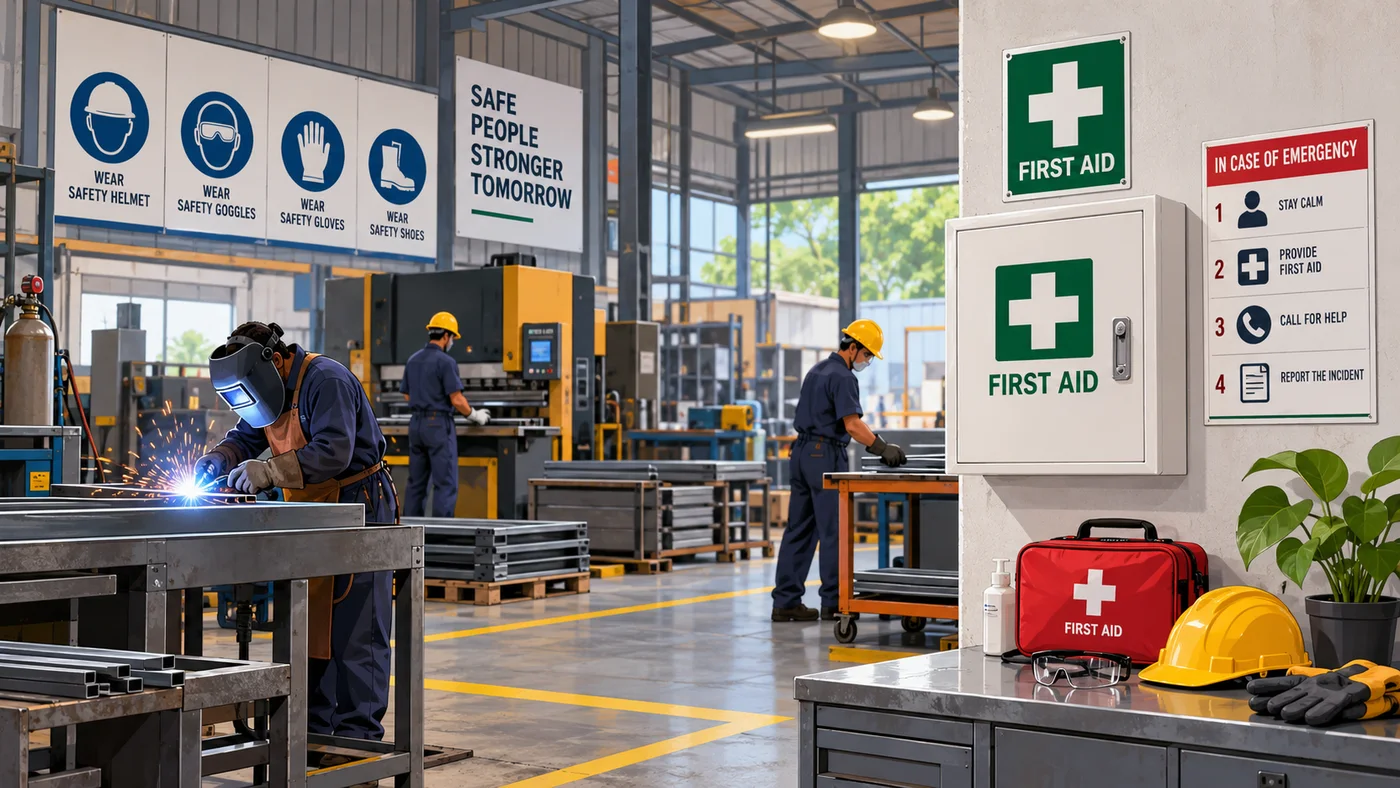
In metal manufacturing facilities, hazards can arise from moving machinery, sharp metal components, welding fumes, electrical installations, excessive noise, and the movement of heavy materials.
Effective workplace safety management should therefore include regular hazard identification, risk assessments, equipment inspections, appropriate machine guarding, safe material-handling procedures, and access to suitable personal protective equipment (PPE).
For example, an inadequately guarded cutting machine may expose an operator to serious injury, while improper storage of metal sheets can create falling object and handling hazards. Similarly, insufficient control of welding fumes may increase occupational health risks.
Identifying these hazards and implementing suitable controls before an incident occurs is essential.
Employers should also ensure that employees receive appropriate instructions, understand their responsibilities, and are adequately trained to perform their assigned tasks safely.
Workplace safety should be viewed not simply as a regulatory requirement, but as a continuing management responsibility that supports operational stability and employee confidence.
The Role of Human Resource Management in Occupational Health and Safety
Although technical safety responsibilities are often shared among production managers, engineers, supervisors, and designated safety personnel, the HR department plays an important supporting role.
HR acts as a connection between management policies and employee practices, helping ensure that workplace safety expectations are communicated, understood, and consistently reinforced.
One of HR's primary contributions is coordinating employee induction and training programmes. Newly recruited employees, particularly those entering manufacturing environments, should receive appropriate safety guidance before undertaking their assigned responsibilities.
This may include awareness of workplace hazards, PPE requirements, emergency procedures, accident-reporting arrangements, and relevant safe operating practices.
HR can also maintain training records, coordinate refresher programmes, identify competency gaps, and collaborate with department heads when employees are assigned new responsibilities or introduced to unfamiliar machinery.
Furthermore, HR can support management in developing clear safety policies, communicating workplace instructions, and encouraging employee participation in occupational safety initiatives.
By integrating safety awareness into recruitment, onboarding, training, and employee development, HR contributes to building a workforce that is both competent and safety conscious.
Employee Training and Building a Positive Safety Culture
Workplace safety becomes effective when employees understand that accident prevention is a shared responsibility.
Even well-designed policies and procedures may fail to prevent incidents if employees are unaware of potential hazards or do not consistently follow safe working practices.
Regular safety awareness programmes, toolbox meetings, practical demonstrations, and emergency preparedness exercises can strengthen employees' understanding of workplace risks.
In manufacturing environments, practical training is particularly important because employees may work with equipment capable of causing serious injuries when operated incorrectly.
Supervisors play a key role in reinforcing safety procedures, observing working practices, and correcting unsafe conditions before they develop into incidents.
Employees should also be encouraged to report damaged equipment, unsafe conditions, potential hazards, and near-miss incidents promptly.
Creating an environment where employees can communicate safety concerns openly, without unnecessary fear of blame, helps organizations identify risks that might otherwise remain unnoticed.
A positive safety culture develops through consistent management commitment, effective communication, employee involvement, and continuous attention to safe working practices.
Workplace Accident Reporting and Documentation
Accident reporting and accurate documentation are essential components of effective occupational health and safety management.
When an incident occurs, the immediate priorities should include protecting affected employees, arranging necessary medical assistance, and preventing further harm.
Following the incident, an appropriate investigation can help identify contributing factors, determine underlying causes, and establish corrective actions to prevent similar occurrences.
Maintaining reliable records of workplace incidents, safety inspections, training activities, risk assessments, and corrective actions also enables organizations to monitor their safety performance over time.
Under Sri Lanka's Factories Ordinance, certain accidents, dangerous occurrences, and occupational diseases are subject to statutory notification requirements. Organizations must identify the reporting obligations applicable to the incident and comply with the prescribed procedures.
HR can assist with employee-related records, communication, and documentation, while management and relevant technical personnel take responsibility for the operational investigation and implementation of preventive measures.
Information relating to employees' health and workplace injuries should be handled accurately, responsibly, and with appropriate confidentiality.
Effective reporting systems should focus not only on documenting what happened, but also on understanding why it happened and how future incidents can be prevented.
Continuous Improvement and Legal Compliance
Occupational health and safety is not a one-time activity. It requires continuous monitoring, evaluation, and improvement.
As manufacturing organizations expand their operations, introduce new machinery, modify production processes, or recruit additional employees, existing workplace risks may change.
Regular safety inspections, updated risk assessments, employee feedback, and management reviews can help organizations identify emerging hazards and evaluate the effectiveness of existing controls.
HR can support this process by reviewing training needs, coordinating awareness programmes, monitoring training completion, and communicating changes in workplace safety procedures.
International management system standards such as ISO 45001 can also provide a structured framework for managing occupational health and safety risks, strengthening leadership involvement, and promoting continual improvement.
However, adopting or obtaining certification to an international standard does not remove an organization's responsibility to comply with applicable Sri Lankan laws and regulations.
A sustainable approach to workplace safety combines legal compliance, practical risk management, employee participation, and a genuine commitment to continuous improvement.
Conclusion
Occupational health and safety is more than a legal obligation. It is an essential part of responsible business management, and a reflection of how an organization values its people.
For Sri Lanka's manufacturing industry, particularly the metal fabrication sector, maintaining safe working environments requires cooperation among employers, HR professionals, production managers, supervisors, technical personnel, and employees.
Through effective hazard identification, practical safety training, clear communication, accurate documentation, and continuous improvement, organizations can reduce workplace risks while strengthening employee confidence and operational efficiency.
Ultimately, a safer workplace is the foundation of a stronger workforce, sustainable productivity, and long-term organizational success.
Legal Disclaimer: This article is provided for general informational and educational purposes only and does not constitute legal advice. Organizations should refer to the current provisions of Sri Lankan legislation, including relevant amendments and regulations, and seek professional guidance when determining their specific legal obligations.