
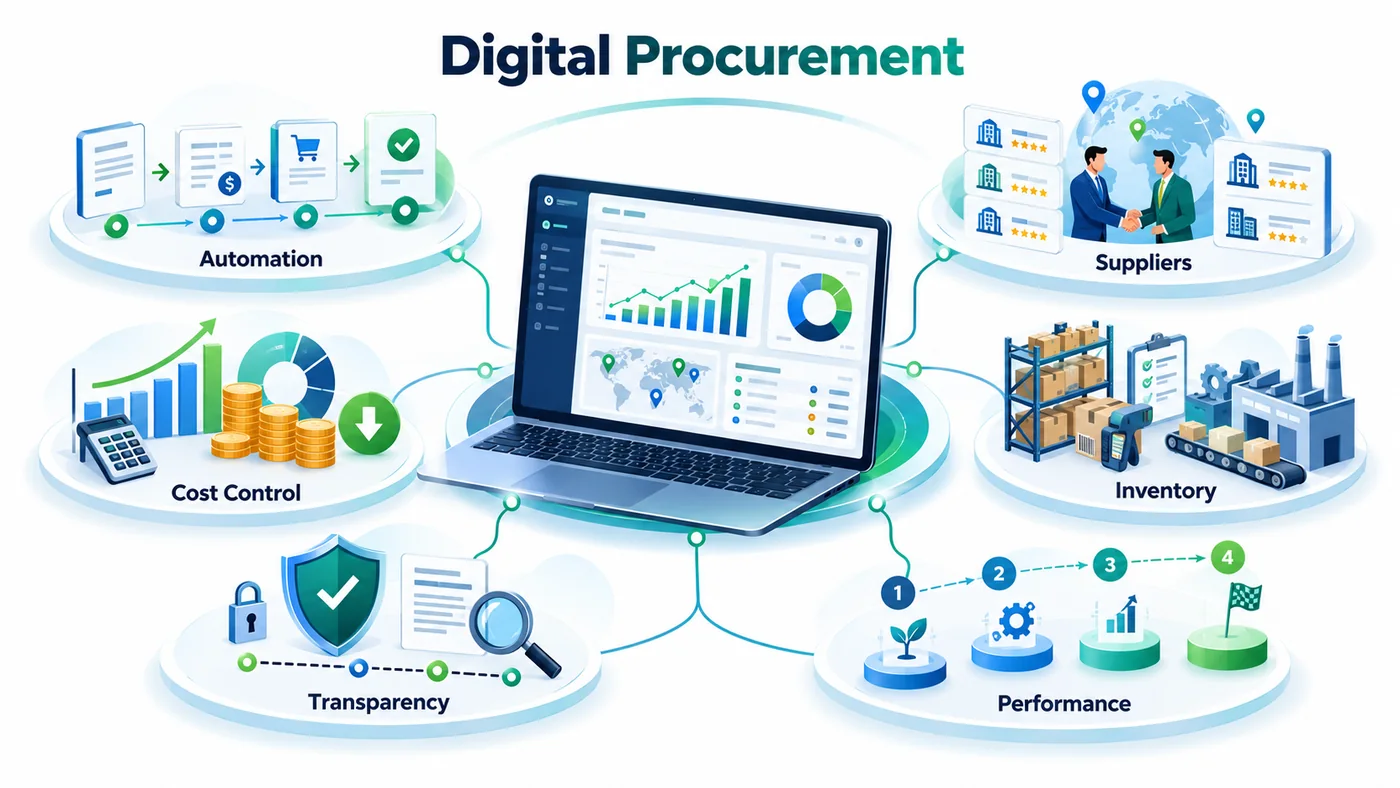
Digital procurement uses digital records and workflows to organize how a business requests, approves, places and tracks purchases. When these steps connect with supplier, cost and stock information, people can make decisions with a clearer view of what is needed, when it is needed and how it fits the budget.
Automate routine steps
A digital workflow can route purchase requests for review, record approvals and make order status easier to check. Routine reminders and standardized forms can reduce repeated data entry and help teams notice missing details before an order is placed. Employees still need clear approval limits and responsibility for each decision.
Keep supplier information together
A useful supplier record can include contact details, product specifications, quotations, payment terms and delivery history. Bringing these details together helps Procurement compare offers against the actual requirement. Price is one factor; specification, quality and a delivery schedule that supports the work matter too.
Connect spending with inventory
Procurement decisions are easier to plan when teams can see budgets, current stock and expected requirements. Up-to-date inventory information can help identify items that need replenishing and give the team time to account for supplier lead times. This can reduce the risk of emergency purchases, material shortages and excess stock.
Make decisions transparent
Digital records can show who requested, reviewed and approved a purchase, what was ordered and what was received. That history supports internal checks and makes orders easier to trace. Clear procedures, suitable access controls and reliable backups remain important; software can record a process, but it cannot replace sound controls.
Review performance and improve
A dashboard is useful when it helps people act on reliable information. Teams can review order processing time, supplier delivery performance, price changes, urgent purchases and stock shortages to see where the process needs attention. A regular review can turn those records into practical improvements.
For a manufacturing company such as Meklet, procurement information is most useful when it connects team requirements with suitable suppliers and planned production needs. Digital tools can support that work, but the results depend on accurate records, clear approvals and timely communication. A practical starting point is to map the current process, standardize the information teams record, and then automate the steps that benefit from it.