
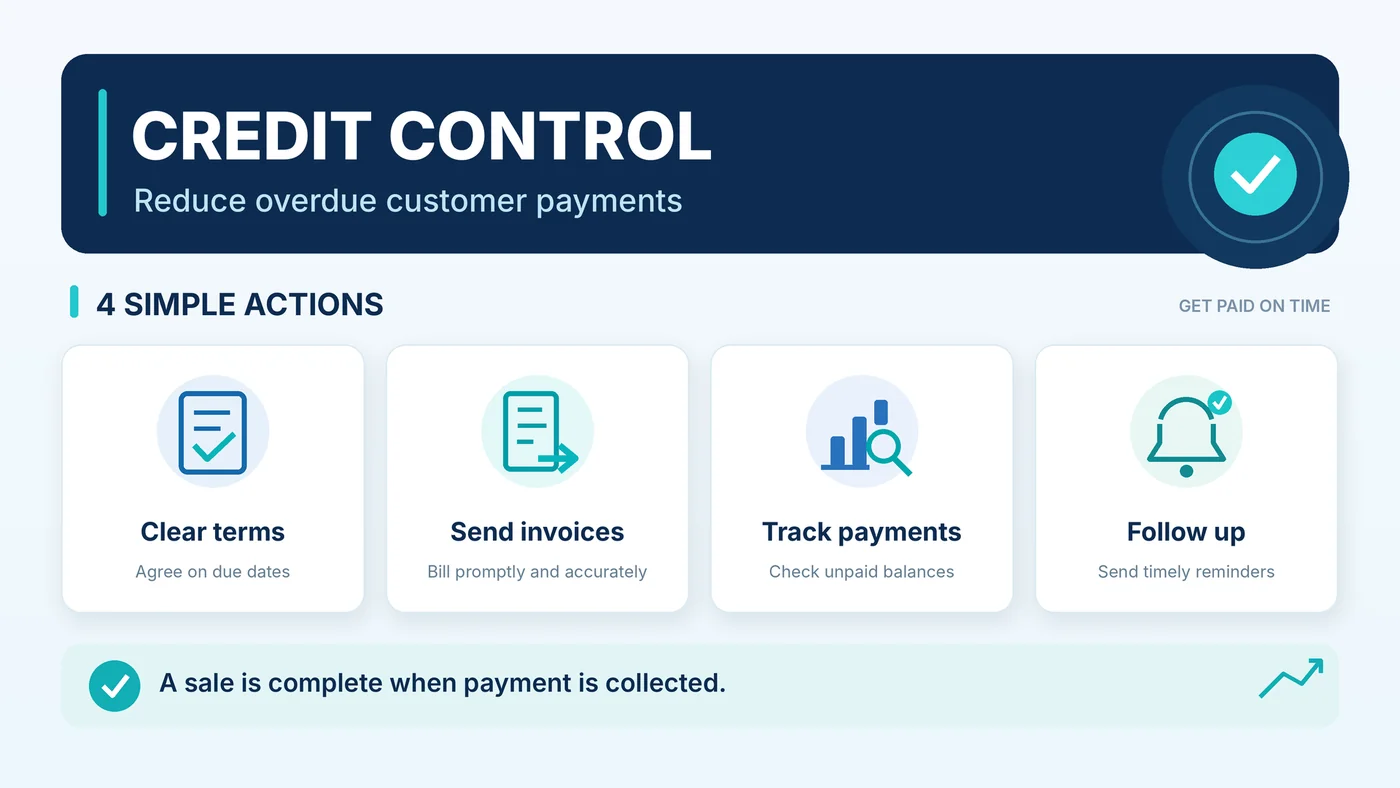
Credit control is an essential function of the Accounts Department that helps businesses maintain healthy cash flow and financial stability. Even when a company generates strong sales, delayed customer payments can create financial difficulties. Effective credit control ensures that customers pay within agreed credit periods, helping businesses meet their daily expenses, pay suppliers, and support future growth.
Understanding Credit Control
Credit control is the process of managing customer credit, monitoring outstanding invoices, and ensuring payments are collected on time. It begins before a credit sale is made and continues until the outstanding balance is fully settled.
A well-organized credit control process helps businesses reduce overdue payments, minimize bad debts, and maintain positive customer relationships.
Why Do Customer Payments Become Overdue?
Customer payments may be delayed for several reasons, including cash flow problems, missing invoices, incorrect billing details, payment disputes, or a lack of follow-up. Sometimes, customers may forget payment due dates or misunderstand the agreed credit terms.
Identifying the reason for each delay helps the Accounts Department take appropriate action and resolve payment issues more efficiently.
Practical Ways to Reduce Overdue Payments
1. Set Clear Credit Terms
Establish clear payment terms before supplying goods or services on credit. Ensure customers understand their credit limits, payment deadlines, and other relevant conditions.
2. Issue Invoices Promptly
Send accurate invoices immediately after goods are delivered or services are completed. Include the invoice number, date, payment due date, amount payable, and bank details to avoid unnecessary delays.
3. Monitor Outstanding Invoices Regularly
Maintain an updated accounts receivable report and review overdue invoices frequently. An accounts receivable ageing report helps identify balances that are current or overdue by 30, 60, or 90 days.
4. Follow Up on Payments on Time
Send friendly reminders before payment deadlines and follow up promptly when invoices become overdue. Maintain records of telephone conversations, emails, payment promises, and agreed settlement dates.
5. Reconcile Customer Accounts
Compare the company's records with customer statements to identify missing invoices, unallocated payments, credit notes, and differences in outstanding balances. Resolving these issues quickly helps prevent payment disputes.
6. Escalate Long-Overdue Accounts
If payments remain outstanding despite repeated reminders, escalate the matter to management and review the customer's credit facilities according to company policy. Any further credit restrictions should follow agreed terms and appropriate approval procedures.
The Role of Teamwork in Credit Control
Effective credit control requires cooperation between the Accounts, Sales, and other relevant departments. Sales representatives can help communicate with customers, resolve order-related issues, and obtain payment commitments. The Accounts Department must maintain accurate records, monitor deadlines, and provide regular outstanding-payment reports to management.
This teamwork improves accountability and helps the company collect payments more efficiently.
Conclusion
Credit control is more than collecting overdue payments; it is about protecting the company's financial resources and maintaining sustainable business relationships. By setting clear credit terms, issuing accurate invoices, monitoring outstanding balances, following up consistently, and resolving disputes quickly, businesses can reduce overdue payments and improve cash flow.
Remember: A sale is not financially complete until the payment is collected. Effective credit control turns sales into cash and helps build a stronger, more financially stable business.