
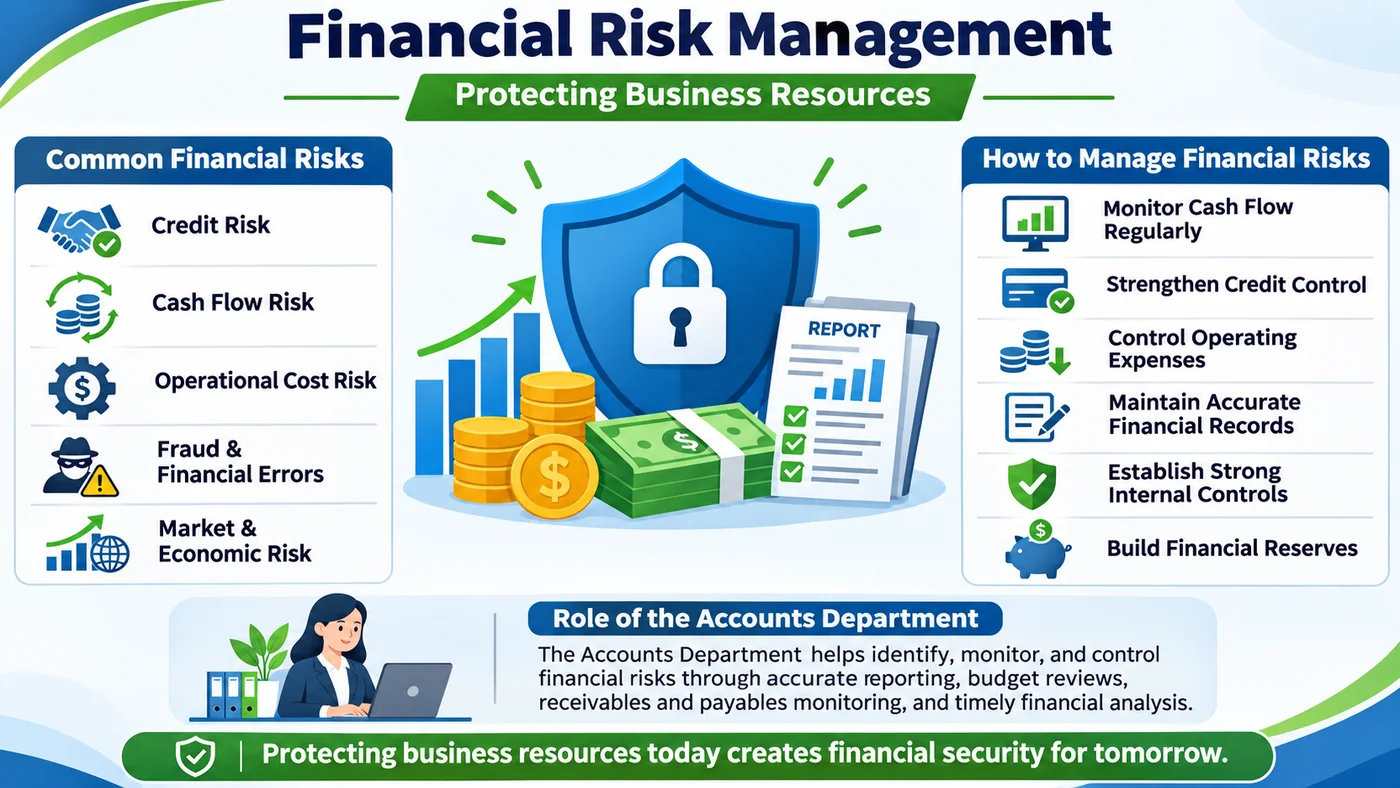
Financial risk management is an important part of maintaining a successful and financially stable business. Every organization faces financial risks that can affect its cash flow, profitability, daily operations, and future growth. These risks may arise from delayed customer payments, increasing production costs, unexpected expenses, poor financial planning, or changes in market conditions.
The Accounts Department plays a vital role in identifying, monitoring, and controlling these risks. Effective financial risk management helps businesses protect their resources, reduce financial losses, and make better management decisions.
What Is Financial Risk Management?
Financial risk management is the process of identifying potential financial threats, evaluating their possible impact, and taking appropriate actions to minimize losses.
It involves monitoring cash flow, controlling expenses, managing customer credit, reviewing financial reports, and ensuring that company resources are used responsibly.
A proper financial risk management system allows businesses to prepare for unexpected situations and maintain financial stability.
Common Financial Risks in Business
1. Credit Risk
Credit risk occurs when customers fail to settle their outstanding invoices within the agreed payment period. Excessive overdue balances can reduce available cash and create difficulties in meeting business obligations.
2. Cash Flow Risk
Cash flow risk arises when a business does not have sufficient cash to pay salaries, suppliers, utility bills, and other operating expenses on time. Even profitable businesses may experience cash shortages due to delayed customer payments.
3. Operational Cost Risk
Increasing raw material prices, electricity costs, transportation expenses, and labour costs can affect production budgets and reduce profit margins.
4. Fraud and Financial Errors
Unauthorized payments, incorrect accounting entries, duplicate invoices, and weak internal controls can result in financial losses. Proper verification and approval procedures help minimize these risks.
5. Market and Economic Risk
Changes in exchange rates, interest rates, inflation, and market demand can affect purchasing costs, selling prices, and overall business profitability.
Practical Ways to Manage Financial Risks
1. Monitor Cash Flow Regularly
Prepare cash flow forecasts and compare expected income with upcoming expenses. Identifying potential cash shortages early allows management to take corrective action.
2. Strengthen Credit Control
Set appropriate customer credit limits, monitor overdue invoices, and follow up on outstanding payments. Regular customer account reconciliations also help identify payment differences.
3. Control Operating Expenses
Review monthly expenses, compare actual costs against budgets, and identify unnecessary spending. Monitoring production costs helps businesses maintain their expected profit margins.
4. Maintain Accurate Financial Records
Ensure that all transactions are recorded correctly and supported by proper documentation. Regular bank reconciliations and financial reviews help identify errors and unusual transactions.
5. Establish Strong Internal Controls
Implement proper authorization procedures for purchases, payments, and financial transactions. Separating responsibilities and verifying supporting documents can reduce the risk of fraud and mistakes.
6. Build Financial Reserves
Maintain an emergency cash reserve to manage unexpected expenses, temporary sales declines, or other financial challenges. This reduces dependence on short-term borrowing.
The Role of the Accounts Department
The Accounts Department supports financial risk management by preparing accurate financial statements, monitoring receivables and payables, analysing expenses, reviewing budgets, and reporting financial concerns to management.
Working closely with Sales, Procurement, Production, Stores, and Human Resources helps ensure that financial information is accurate and that potential risks are identified across the organization.
Timely financial reporting enables management to make informed decisions and take preventive action before small problems become major financial challenges.
Conclusion
Financial risk management is not only about preventing financial losses; it is about protecting business resources and preparing the organization for future challenges.
Through effective cash flow monitoring, credit control, expense management, accurate reporting, and strong internal controls, businesses can reduce financial risks and improve long-term stability.
Remember: Protecting business resources today creates financial security for tomorrow. Every accurate record, controlled expense, and responsible financial decision contributes to a stronger and more sustainable business.