
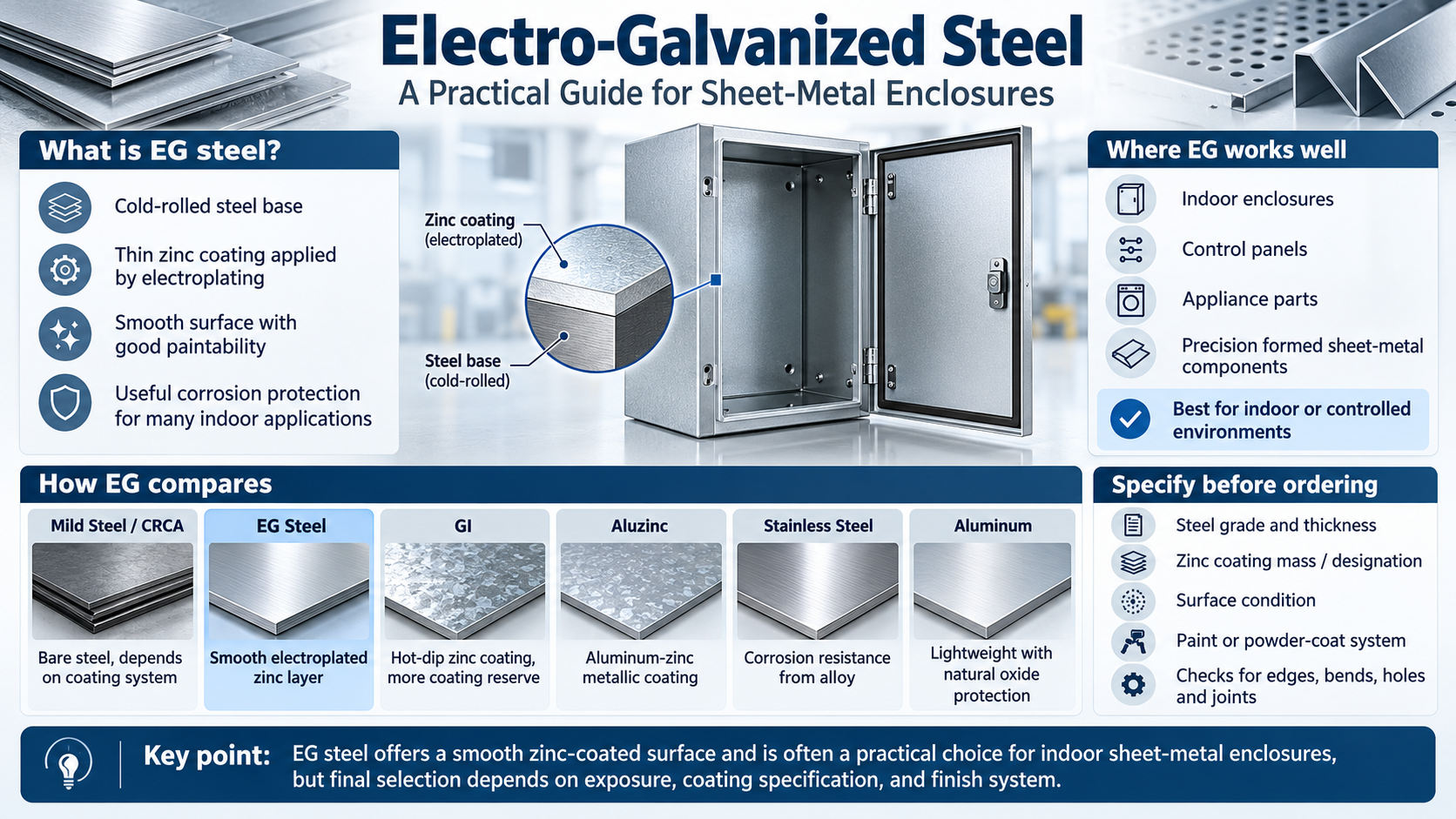
Choosing sheet metal for an enclosure affects its corrosion protection, appearance, fabrication and finishing. Electro-galvanized steel, commonly called EG steel, combines a cold-rolled steel base with a thin zinc coating applied by electroplating. It offers a smooth surface and useful protection for many indoor applications.
EG can be a practical choice for electrical enclosures and precision sheet-metal parts, but it is not a universal solution for every environment. The right choice depends on the exposure, the specified zinc coating and the complete finish system.
What is electro-galvanized steel?
EG steel starts with cold-rolled steel sheet. An electrical current deposits zinc onto the steel surface, producing a thin, generally uniform coating. Because the zinc is deposited electrochemically, the surface is typically smooth and free from the visible spangle sometimes found on galvanized sheet.
The steel provides the part’s strength and formability. The zinc coating adds corrosion protection and a suitable surface for painting or powder coating. The coating designation matters: the term “EG” alone does not state how much zinc is present on each face.
Meklet’s published material specification lists EG sheet in nominal thicknesses from 0.7 mm to 2.0 mm, with a standard sheet size of 1220 × 2440 mm. Confirm current availability, grade and batch details for each project.
How EG compares with other sheet materials
| Material | Protection approach | Where it may fit | Main selection point |
|---|---|---|---|
| Mild steel / CRCA | Bare steel relies on its paint or coating system for corrosion protection. | Cost-conscious indoor components and parts requiring forming or welding. | Specify the full surface-preparation and coating system. |
| Electro-galvanized steel (EG) | A thin, smooth zinc layer is deposited by electroplating. | Indoor enclosures, panels and precision parts where a smooth surface and paintability are useful. | Confirm zinc coating mass on each face, surface treatment and exposure. |
| GI / hot-dip zinc-coated sheet | Zinc is applied by a hot-dip process; coating weight depends on the selected grade. | Applications where a greater zinc coating reserve is specified. | Compare the coating designation and assess formed edges and the final finish. |
| Aluzinc / Al-Zn-coated steel | A metallic aluminum-zinc coating protects the steel base. | Sheet-metal applications where the specified Al-Zn product suits the exposure and design. | Confirm the product grade and review cut edges and formed areas. |
| Stainless steel 304, 316 or 316L | Corrosion resistance comes from the alloy itself rather than a zinc coating. | Applications needing corrosion-resistant base metal. | Choose the grade for the environment; 316 is often considered where chloride exposure is a concern. |
| Aluminum sheet | A naturally formed oxide layer helps protect the metal. | Weight-sensitive designs and applications suited to the selected aluminum alloy and finish. | Check the alloy, joining method and contact with dissimilar metals. |
These materials are not interchangeable based on a single property. Coating specification, part geometry, fabrication and service conditions all affect the result.
Where EG works well
EG is often considered for indoor or controlled environments where a clean, smooth surface is important. Common uses include electrical enclosures, panel boxes, appliance parts and formed sheet-metal components.
It can also be used under a paint or powder-coating system. Before production, confirm the sheet’s oil, passivation or other surface treatment with the material supplier and coating provider. These conditions affect cleaning, pretreatment and coating adhesion.
For a powder-coated enclosure, check a representative formed part as well as a flat test panel. Bends, punched holes, sheared edges and joints may expose steel or receive a different coating build from the flat surface.
When to consider another material
EG’s zinc layer is generally thinner than the coating on hot-dip galvanized steel, so it may provide less corrosion reserve where parts are frequently wet or exposed to aggressive conditions. For outdoor, coastal, chemical or washdown service, assess the full system before selecting the sheet.
Depending on the project, a specified GI or Al-Zn-coated sheet, stainless steel, aluminum, or a protected mild-steel system may be more appropriate. No material name alone establishes suitability for an exposure class or guarantees a service life.
How to specify EG sheet
A useful EG specification should identify:
- The steel grade and nominal sheet thickness.
- The required zinc coating designation or mass for each face.
- The required surface condition, including oiling or passivation.
- The intended environment and whether the part will be painted or powder coated.
- The pretreatment, finish and inspection requirements.
- Any special checks for cut edges, holes, bends and joints.
Use the supplier’s material certificate for the delivered batch when confirming mechanical properties and coating details.
Common questions
Is electro-galvanized steel stainless steel?
No. EG is steel with a zinc coating. It is different from stainless steel, where corrosion resistance comes from the alloy composition.
Can EG steel be powder-coated?
Yes, but the surface condition and pretreatment must suit the coating process. Validate the powder-coated finish on representative parts, including formed areas and edges.
Is EG suitable for outdoor use?
It depends on the exposure and the complete protection system. EG sheet should not be assumed suitable for every outdoor, coastal or industrial environment based only on its material name.
Is EG the same as GI?
No. Both use zinc to protect steel, but EG deposits zinc by electroplating, while GI sheet is hot-dip zinc-coated. Their coating specifications and surface characteristics can differ.
Choose the material for the whole application
Electro-galvanized steel offers a smooth zinc-coated surface that can suit indoor enclosures and precision sheet-metal fabrication. Its performance depends on the selected coating, surface treatment, fabrication details and any paint or powder-coating system applied.
Describe the installation environment and finish requirements before selecting the sheet. For related guidance, see Meklet’s Corrosion Classes Explained for Metal Enclosures.