
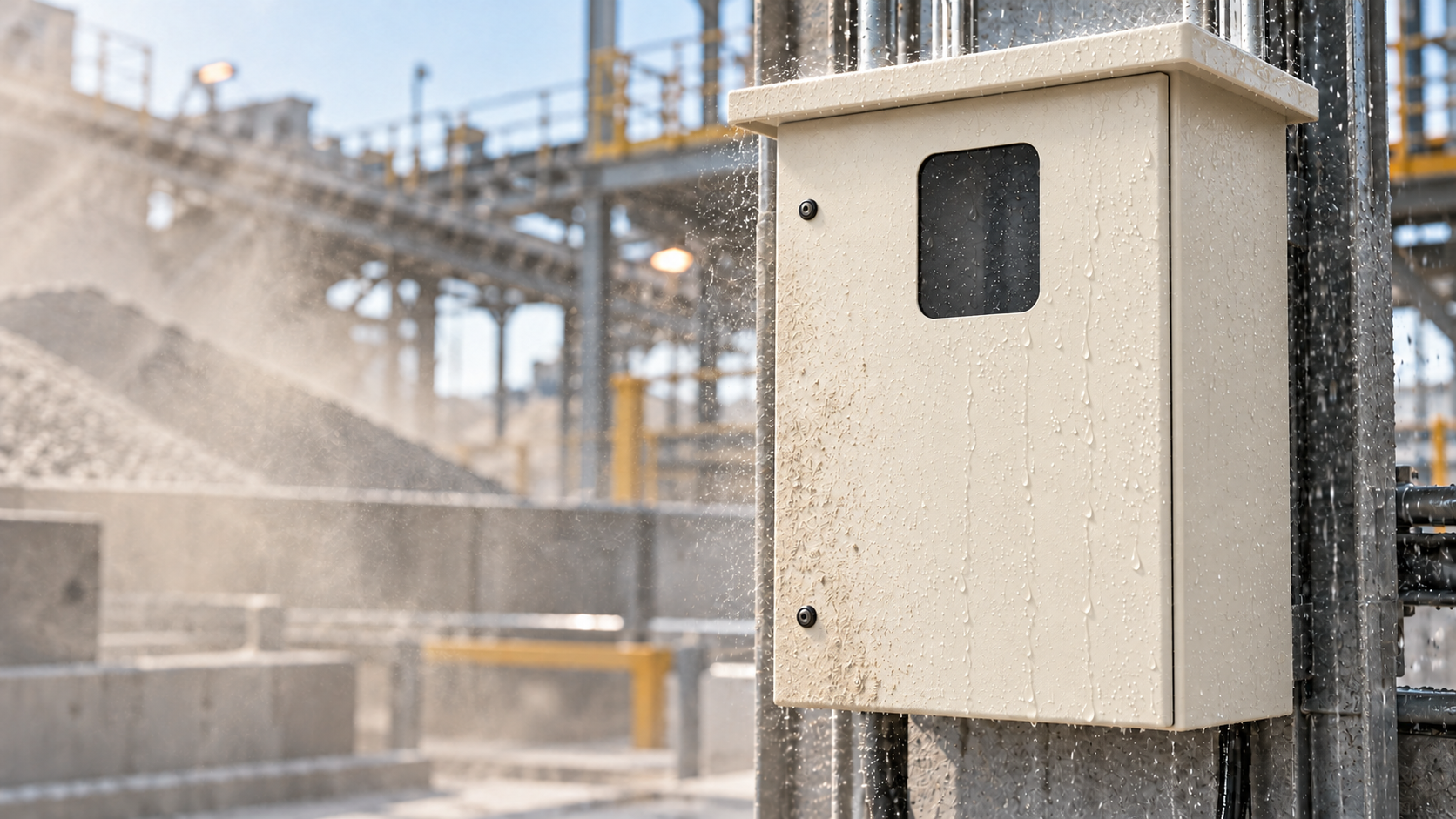
Ingress Protection (IP) ratings, defined under IEC 529 (aligned with BS EN 60529:1991), classify the degree of protection provided by enclosures for electronic equipment against the intrusion of foreign objects (including body parts like hands and fingers), dust, accidental contact, and water.
STRUCTURE OF AN IP RATING
IP ratings are expressed as "IP" followed by two or three numbers (e.g., IP65):
For example, IP54 means:
- 5: Protection against limited dust ingress and full protection against contact.
- 4: Protection against water splashing from any direction.
Importance of Higher Values
The higher the values of these digits, the greater the level of protection:
- IP54 offers better protection than IP42 against environmental factors.
IP CODE REFERENCE TABLE
Here’s a simplified reference for the two main digits in an IP rating:
First Digit (Solid Objects Protection)
| Digit | Protection Description |
|---|---|
| 0 | No protection |
| 1 | Protection against solid objects >50mm |
| 2 | Protection against solid objects >12.5mm |
| 3 | Protection against solid objects >2.5mm |
| 4 | Protection against solid objects >1mm |
| 5 | Dust-protected (limited ingress) |
| 6 | Fully dust-tight |
Second Digit (Water Protection)
| Digit | Protection Description |
|---|---|
| 0 | No protection |
| 1 | Protection against vertically dripping water |
| 2 | Protection against water dripping at 15° angle |
| 3 | Protection against spraying water |
| 4 | Protection against splashing water |
| 5 | Protection against water jets |
| 6 | Protection against powerful water jets |
| 7 | Protection against temporary immersion in water |
| 8 | Protection against continuous immersion in water |
This standardized system helps manufacturers and users determine the suitability of enclosures for specific environmental conditions. By referencing IP codes, one can choose products with appropriate protection levels for industrial, outdoor, or specialized applications.
To enhance the protection of a panel board, the following measures can be implemented:
- Uniform Powder Coating Thickness: Ensure powder coating thickness meets standards to insulate the enclosure and prevent hazards in the event of a fault condition.
- Properly Assembled and Earthed Doors: Ensure panel doors are correctly assembled and grounded for safety.
- Tailored Cover Plates: Custom-made cover plates provide extra protection when the panel door is opened.
- Bus Bar Insulation & Perspex Sheets: Insulating bus bars and using Perspex sheets offer additional protection when cover plates are removed.
- Cable Entry Glands: Use glands for cable entries to secure and protect the connections.
Meklet Switchboards manufactures enclosures up to IP54 rating for optimal protection.
 Preview image ↗
Technical reference · infographic
IP Ratings at a Glance
See how the first digit describes solid-object protection and the second describes water protection, with an IP65 rating example.
View full infographic